
Complete Guide to Law Firm Website Design

What makes a good design? Is it only about the appearance, or how each element serves a clear purpose? Good design gives information structure, direction, and meaning before a person takes the next step.
That said, law firm websites are often the first serious point of contact between a prospective client and a legal team. This means that website design, writing, service usability, and search performance all shape how the firm is perceived by clients and site visitors before any conversation begins.
Effective law firm website design helps visitors understand the firm’s services, and also supports legal marketing by aligning article content to help people search for legal help online. This guide serves as a practical framework for creating a law firm website that provides credible, search-friendly content that is built to generate qualified inquiries.
Homepage Structure
The W’s of a Law Firm Homepage
Law firm homepages should give visitors a valid starting point by showing what the website offers, where they should go next, why the information is worth their attention, and who they should reach out to. When the homepage structure is properly set, the page becomes easier to scan, easier to trust, and more effective at guiding users toward the right action.
Maximize Your Client Retention Through First Impression
Your website homepage should immediately explain who the firm serves, what legal matters it handles, and where it provides services. Visitors should not have to scroll through vague branding statements before learning whether the firm can help them. Hero sections should include a clear and concise headline, a short supporting statement, a visible phone number for contact, and a direct call to action. For instance, a family law firm may open with language about divorce, custody, support, and mediation in a specific city or state. In contrast, a personal injury firm may focus on serious accident claims and recovery support.
The first screen of your website should avoid too much clutter. Too many buttons, rotating banners, pop-ups, badges, and competing messages can weaken the page’s purpose, and worse, could drive away potential clients. Prospective clients often arrive with urgency and uncertainty, so the homepage should reduce friction, and having a clean layout, readable text, and one primary action helps visitors understand what to do next and who to approach for legal assistance.
Showcase Pathways to your Practice Areas
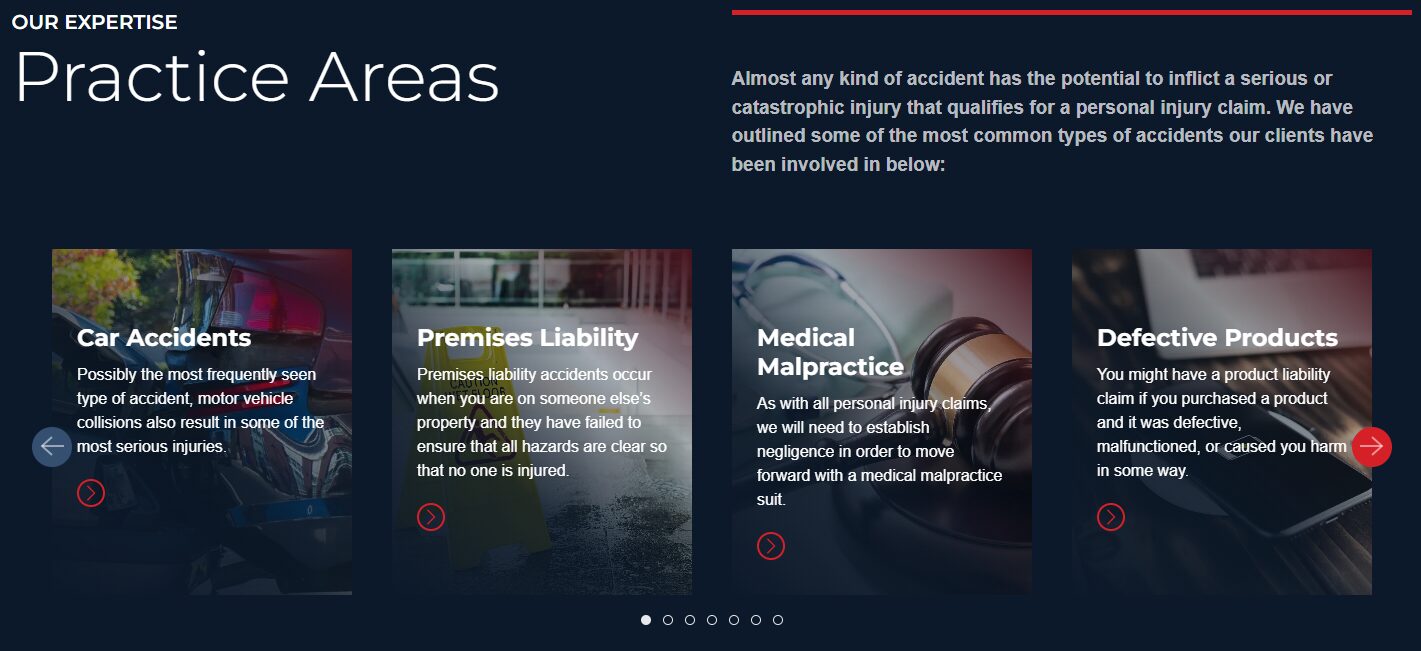
Homepages should guide visitors to the firm’s core practice pages, and links to these pages should be descriptive and organized by legal issue. A link that says “Car Accident Lawyer” or “Estate Planning Attorney” is more helpful than a generic link that says “Services.” Descriptive internal links also help search engines understand how the website is organized, which supports law firm SEO and stronger legal marketing performance.
Practice area sections should not try to explain every detail of the law on the homepage. Their job is to introduce the service and move the visitor to a more focused page. Short summaries, clean cards, and direct links work well because they make the homepage easy to scan. Firms with many services may group related matters under broader categories, and some notable examples of which are:
- Personal injury law
- Family law
- Business law
- Estate planning
- Criminal defense
- Employment law
- Immigration law
Include Firm Introduction and Local Relevance
Your homepage should include a short firm introduction that explains the attorneys, the firm’s mission, and the type of client experience the visitor can expect. This section should feel human but still professional since you have to be approachable to queries and as understanding as possible with client complaints. It may mention the firm’s history, service philosophy, or main strengths; however, it should avoid empty claims such as “the best lawyers” or “guaranteed results.”
Local relevance is also important because many legal searches have city, county, or state intent. The homepage should clearly show the following:
- Firm’s office location
- Service area
- Phone number
- Links to location pages when the firm has several offices
Clients searching for legal help nearby should be able to confirm quickly that the firm serves the right area.
Mention Firm’s Credibility Without Overstatement
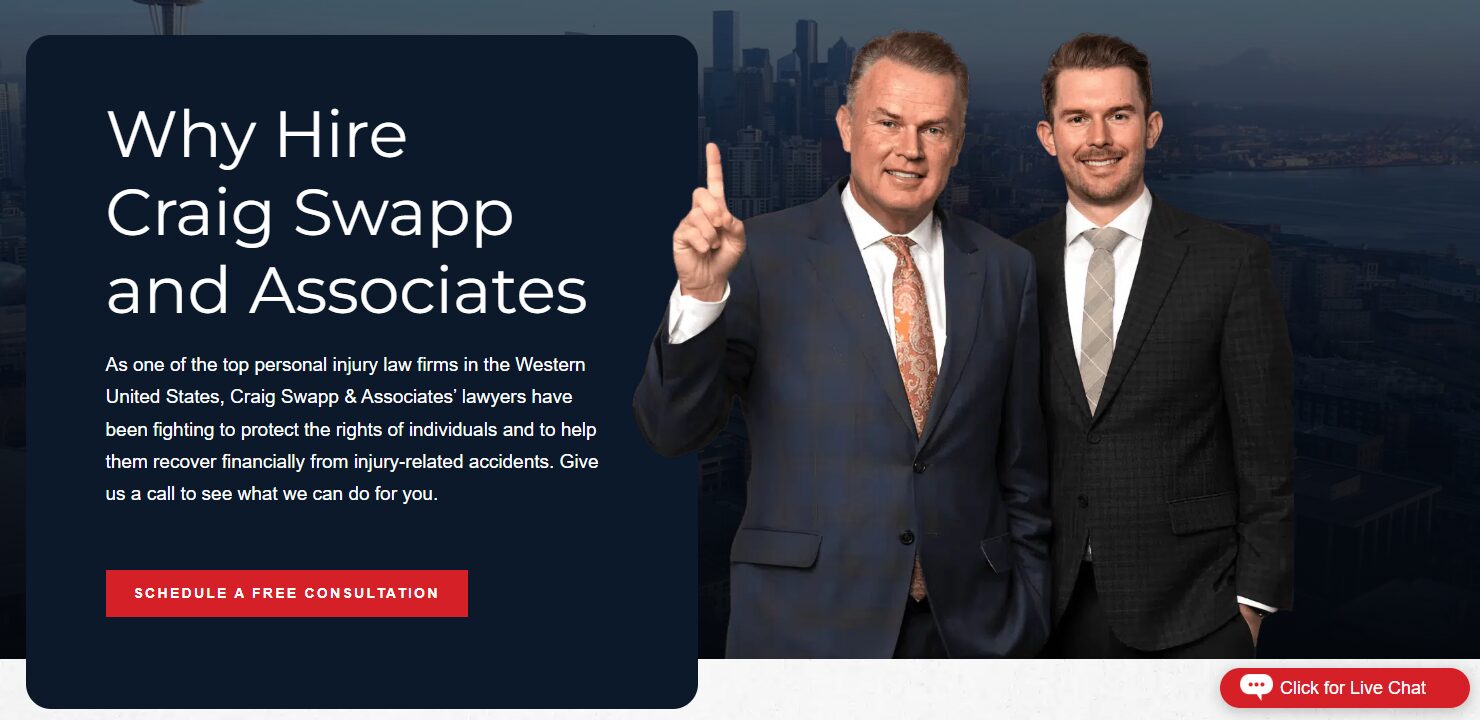
Law firm homepages can include awards, links to Google reviews, professional memberships, case results, bar admissions, media mentions, and years of service when those statements are accurate and permitted under applicable ethics rules. Trust signals such as these should support the visitor’s decision-making without creating unrealistic expectations. The American Bar Association’s Model Rule 7.1 states that lawyers must not make false or misleading communications about their services, so homepage claims should be written carefully and supported where needed.
Law firms should aim for the best homepage structure, which balances marketing with approachability. It tells visitors what the firm does, points them to the right page, gives them reasons to trust the firm, and provides the simplest yet best course of action.
Mobile Optimization
What happens when a visitor opens a website on a phone and the text is too small, the buttons are hard to tap, or the page loads too slowly? In this day and age, mobile-friendly websites are no longer optional because many visitors now browse, compare, and make decisions from their phones. When a law firm’s website is fit for mobile use, it becomes easier to read, faster to use, and more effective at guiding your potential clients into hiring your services.
Responsive Design for Legal Search Behavior
Mobile optimization is now essential for modern law firm website design because many prospective clients search for legal help from a mobile device. A 2023 report from the American Bar Association mentioned that “20% of respondents do not know whether their firm’s site is mobile-friendly”, which begs the question, “how many potential clients did they miss out on because of a website unoptimized for mobile?”
Responsive design allows the website to adjust to different screen sizes, and texts should remain readable without zooming, images should scale properly, and page sections should stack in a logical order. Mobile websites should not feel like a squeezed desktop layout – it should feel intentionally built for smaller screens and cater to faster decisions for your potential clients.
Click-to-Call and Mobile Forms
The law firm’s phone number should be visible on mobile pages, especially in the header or sticky action area. Click-to-call functionality is important since many legal inquiries still begin with a phone call, apart from filling out a contact form. Site visitors should be able to tap the number and open the phone dialer without copying or retyping anything for ease of access.
Mobile forms should be short and simple since a long intake form may work later in the client process, but the first website form should usually ask only for the information needed to respond:
- Name
- Phone number
- Email address
- Practice area/s
- A brief message about the inquiry
Mobile Content Layout
Mobile users scan pages quickly, so legal content must be organized with strong headings and logical spacing. Your practice page should open with the legal issue, the jurisdiction, and the main reason the page matters. Long introductions with broad statements can slow the user down. Article content and other relevant information can still be detailed, but it should be divided into sections and sequences that are easy to read on a phone.
Additionally, shorter paragraphs help mobile readability, but the writing should still feel complete since legal content should answer common questions, explain key processes, and give visitors enough context to make a decision. Note that mobile optimization does not mean reducing useful content – it means presenting useful content in a format that works on smaller screens.
Accessibility on Mobile Devices
Accessibility should be part of mobile optimization, and the Web Content Accessibility Guidelines from W3C provide widely used standards for making web content more available to people with disabilities. Law firm websites should use readable contrast, proper headings, descriptive links, alt text for meaningful images, and form labels that work with assistive technology.
Accessibility issues in websites can also have legal consequences. In Robles v. Domino’s Pizza, LLC, the Ninth Circuit allowed claims involving website and mobile app accessibility to move forward under disability access laws. Although the case did not involve a law firm, it remains a useful reminder that digital access matters. Legal websites should be usable for as many visitors as possible, including users with vision, motor, hearing, or cognitive disabilities.
Conversion Elements
What happens after a visitor reads the information on a website and feels ready to take the next step? Shouldn’t the page make it easy to call, submit a form, request a consultation, or choose another clear action? The following are conversion elements that law firms must take into account in designing their websites.
Direct and Clear Calls to Action
Conversion elements help a visitor move from reading to taking action. In legal marketing, conversions can be classified as a phone call, consultation request, form submission, live chat conversation, text inquiry, or appointment booking. Your end goal is not to pressure the visitor, but to help them make the next step.
Every major page on your website should have a clear call to action. Your homepage may invite users to schedule a consultation, while a practice page may invite them to speak with the firm about a specific issue, and the wording should match the seriousness of the legal matter. For instance, a criminal defense page may require promptness in action, while an estate planning page may use calmer language focused on planning and preparation.
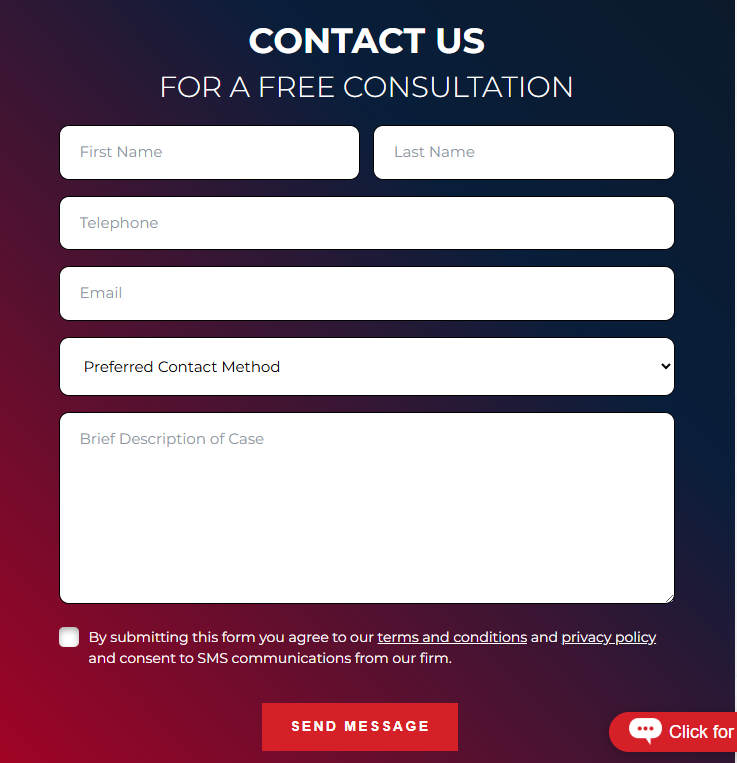
Contact Forms and Intake Flow
Law firm contact forms should be easy to complete and should avoid unnecessary friction. Asking for too much detail from your site visitors too early can reduce form submissions. The first form should collect only the information needed to respond and route the inquiry properly, and more detailed intake questions can come later after they make contact.
Forms should also include a short disclaimer when needed, and should emphasize that submitting a form does not create an attorney-client relationship. This protects both the firm and the visitor from misunderstanding the nature of the communication. Note that your disclaimer should be visible but not written in a way that discourages people from reaching out.
Phone, Chat, and Appointment Options
Different visitors prefer different communication methods, as some want to call immediately, while others prefer a form, text message, or online appointment request. Good law firm websites give visitors more options on how to reach out to the firm, especially on high-intent pages.
Live chats and chatbots can be helpful, but they should be used carefully since you have to establish a rapport with your potential client by engaging as a real human. Chat boxes should not cover important content, appear too aggressively, or suggest that a lawyer is responding if the chat is handled by staff or a vendor.
Attorney Bios
Attorney bios are important because many visitors want to know who may be handling their legal matter before they call. These pages are your main trust and reputation builders and should make the attorney’s background, practice areas, and professional value easy to understand.
Professional Identity and First Impression
Attorney bio pages are among the most visited pages on law firm websites, and rightfully so, because prospective clients want to know who handles their case before they call. Having a strong attorney bio is important, and it should include a professional photo, full name, title, practice focus, office location, and the best way to directly contact the firm.
Additionally, photos should be current and consistent with the firm’s brand since a polished but approachable image helps build confidence and trust. The page should also present information in a clean format so visitors can quickly find credentials, background, and related services.
Client-Focused Biography
A strong bio should not read like a resume pasted onto a website. It should explain the attorney’s work in a way that relates to client concerns. For example, a probate attorney’s bio may explain that the attorney helps families with estate administration, will contests, and fiduciary disputes. A business lawyer’s bio may explain work with contracts, entity formation, employment issues, and commercial disputes.
This client-centric approach helps visitors understand whether the attorney handles the type of issue they are facing. It also supports legal SEO because the bio naturally connects the attorney to relevant practice areas and legal topics.
Showcases Credentials, Admissions, and Recognition
Attorney credentials should be easy to scan. Education, bar admissions, court admissions, professional memberships, awards, publications, speaking engagements, and community service can all help build trust.
Awards and recognition should be presented properly because some honors require explanation, and some jurisdictions have specific rules about how lawyers’ achievements can be advertised. The bio should never imply that an award guarantees a result or that prior success means the same outcome will occur in a new matter.
Include Internal Links and Content Connections
Attorney bios should link to relevant practice pages, blog posts, videos, and office pages. These links help users continue learning and help search engines understand the attorney’s relationship to the firm’s services. For instance, if an attorney handles employment law, the bio should connect to employment litigation, workplace discrimination, wage claims, or business compliance pages when those services are offered.
Lastly, bio pages can also show authored articles and other relevant content from the attorney. These are useful for demonstrating subject knowledge and giving visitors more educational content, and also strengthening the website’s internal content structure.
Practice Pages
Practice pages are often where prospective clients decide whether a firm can help with their legal problem. These pages should be informative and focused on the client’s needs, concerns, and the search intent of the people looking for legal guidance.
Search Intent and Page Focus
Practice pages are the foundation of a strong law firm website because they connect specific legal services with the exact questions, concerns, and search terms prospective clients use when looking for help. Instead of treating practice areas as broad service summaries, each page should be built around a defined legal issue, a clear audience, and a practical reason for the reader to continue learning.
Clients searching for a “child custody lawyer,” “truck accident attorney,” “probate lawyer,” or “business contract attorney” are usually not looking for a general description of the firm. That visitor wants to know whether the firm handles the issue, whether the content applies to the right location, what the next steps may involve, and whether reaching out would be worthwhile. This is why separate practice pages are usually better than one broad services page, especially for legal marketing campaigns that depend on organic search visibility.
Putting a Premium on Useful Legal Education
Practice pages should educate the reader without turning the content into a legal brief. The page should explain what the legal issue means, when it may arise, what risks or deadlines may matter, what the general process may involve, and how legal guidance may help the person make more informed decisions. The writing should be clear enough for the public while remaining accurate enough for a serious legal topic.
Google’s guidance on creating helpful, reliable, people-first content encourages website owners to publish content that provides useful information for people rather than content created mainly to attract search traffic. For law firm practice pages, this means the page should answer real client questions, explain legal concepts in plain language, and avoid filler that adds length without adding value.
Practice pages may explain possible remedies, common legal procedures, general case factors, and reasons to speak with an attorney, but they should not guarantee success or suggest that a result is likely for every visitor. A 1981 oral argument from the United States Supreme Court recognized that false, deceptive, or misleading lawyer advertising may be restricted, which remains an important reminder for every legal website that uses marketing copy to describe legal services.
Local and Jurisdictional Relevance
Legal services are tied to jurisdiction, so practice pages should include accurate local context when the firm serves clients in a specific city, county, region, or state. Criminal defense pages may discuss the local court system, while a personal injury page may describe state deadlines in general educational terms. Having location-specific content helps readers understand whether the information applies to them while also supporting local SEO.
Practice pages should also connect to location pages when the firm has multiple offices or serves multiple markets. A visitor should be able to move from a practice page to a relevant office page, attorney bio, contact page, or related resource without confusion. This internal structure supports both user experience and search visibility because it helps organize the website around legal services and geographic relevance.
Practice Page Structure
Well-structured practice pages usually follow a logical path from problem to explanation to action. It may begin with a short introduction, then move into the legal issue, common situations, process overview, deadlines, frequently asked questions, related services, attorney links, and a final call to action. The order should reflect what the visitor needs to understand before deciding whether to reach out.
Instead of using vague labels such as “What We Do,” a divorce page may use a heading such as “How a Divorce Lawyer Can Help With Custody, Support, and Property Issues.” Consequently, a truck accident page may use a heading such as “What to Do After a Commercial Truck Accident.” Headings such as these help users scan the page and assist search engines in understanding the subject of each section.
Ongoing and Consistent Updates
Practice pages should not remain untouched after publication because laws, procedures, court forms, filing fees, search behavior, and client questions can change. A page that performed well several years ago may become outdated, incomplete, or less competitive if newer pages answer the same topic with more clarity and depth.
Regular content refreshes help keep the website accurate, useful, and aligned with current legal marketing goals. Updating practice pages is not only an SEO task, as it is also a client-service improvement because better content helps visitors in formulating their decision.
Website Speed
Website speed affects user experience, search performance, and conversion because visitors are less likely to stay on a page that feels sluggish, unstable, or impractical to use. This issue matters for law firm websites because many visitors arrive during stressful moments when they need answers quickly and may leave if the page does not load properly.
Why Speed Matters
Fast legal websites create a smoother first impression and help visitors focus on the content rather than the friction of using the site. When a website loads slowly, shifts unexpectedly, or delays after a tap, the user may question whether the firm pays attention to detail. Strong law firm website design should therefore treat performance as part of credibility, not as a technical concern that sits apart from marketing.
Common Speed Problems
Images are often one of the easiest speed issues to fix. Attorney photos, office images, hero banners, blog graphics, and testimonial visuals should be compressed, properly sized, and served in modern formats when possible. A mobile visitor should not have to download an oversized desktop image just to read the first paragraph of a practice page.
Scripts should also be reviewed carefully since many firms add marketing tools over time without removing old tags or unused plug-ins, which can create a slow and cluttered website. Website analytics, call tracking, heatmaps, review feeds, and advertising pixels should also be evaluated based on both usefulness and performance cost.
Technical Maintenance
Website speed requires ongoing maintenance because a site can become slower as new content, tools, plug-ins, and design features are added. Firms that serve clients across multiple cities or states should test performance from more than one network environment whenever possible. Performance testing should use both lab data and field data, as pages may perform well in a controlled test but still create problems for users on older phones, slower connections, or heavily scripted pages.
Speed should be reviewed before and after major website changes because adding a new homepage video, redesigning practice pages, or installing a chat widget may improve one part of marketing while hurting performance elsewhere. A proper law firm website design process protects both visual quality and speed so the site remains useful after launch.
Trust Signals
Websites cannot rely on appearance alone to earn trust because visitors often look for proof before reaching out. Strong trust signals show credibility through accurate claims, client feedback, professional credentials, and most importantly, helpful content.
Reviews and Testimonials
Trust and authority signals help visitors decide whether a law firm appears credible, careful, and worthy of further inquiry. Reviews and testimonials are often among the most influential trust elements because they show how other people describe their experience with the firm.
Reviews should be presented honestly and in compliance with applicable attorney advertising rules. Lawyers must not make a false or misleading communication about themselves or their services. This principle is important for testimonials because a review should not be edited in a way that changes its meaning, implies guaranteed success, or creates an unjustified expectation about future results.
If a testimonial mentions an outcome, the page may need a clear disclaimer explaining that results depend on the facts of each matter. The website should also avoid cherry-picking statements in a way that removes necessary context. Trust is stronger when the content feels transparent and professionally restrained.
Case Results and Professional Proof
Case results and other representative outcomes may support credibility when they are allowed by the relevant jurisdiction’s rules. However, these results should be presented with enough context to avoid misleading visitors. Past results should never be framed as a promise that the same or similar outcome will occur in another matter.
Professional proof may include:
- Bar admissions
- Court admissions
- Board certifications
- Awards
- Speaking engagements
- Written publications
- Leadership roles
- Memberships
- Media references and/or appearances
These details should be current, verifiable, and placed where visitors can easily find them. When an attorney leaves the firm or changes practice focus, their attorney bios, team pages, schema markup, and related practice pages should be updated immediately.
Security and Privacy
Security is an important trust signal because legal website visitors may share sensitive facts before they become clients. A person may submit information about an injury, arrest, divorce, financial dispute, immigration issue, employment problem, or business conflict through a contact form. The website should therefore use secure forms, spam protection, privacy policies, and responsible data-handling practices.
Privacy language should be easy to find and easy to understand. A law firm website should explain how online communication is handled and should make clear when a form submission does not create an attorney-client relationship. This type of clarity helps protect the visitor and the firm while also reducing confusion at the beginning of the intake process.
Third-party tools deserve careful review as well. Chat platforms, scheduling tools, call tracking systems, analytics platforms, and customer relationship management systems may collect user data or route inquiries through outside vendors. A firm should understand how these tools handle information before placing them on pages where prospective clients may share private details.
Educational Authority
Educational content can be one of the strongest trust signals on a law firm website because it shows that the firm understands the questions real people ask before they seek legal help. Blogs, guides, frequently asked questions, YouTube videos, glossaries, and downloadable resources should explain legal topics in a way that is accurate, useful, and understandable.
Content that only repeats keywords without answering meaningful questions does little to build trust. Strong law firm websites should therefore provide content that helps visitors understand their options, recognize possible risks, and decide whether speaking with an attorney may be appropriate.
Trust signals should be woven throughout the website rather than isolated on one page. The homepage may include reviews and professional highlights, attorney bios may include credentials and authored content, practice pages may include relevant FAQs and process explanations, and the footer may include disclaimers, contact information, and privacy links. This layered approach helps credibility build naturally as visitors move through the site.
Navigation
Websites can have strong content, but visitors may still leave if they cannot find it easily. Effective website navigation organizes pages, links, menus, and pathways so users can reach the right information without confusion.
Simple Main Menu
Navigation determines how easily visitors can find the information they need, and it plays a major role in both user experience and legal SEO. A law firm website should use a simple main menu with predictable sections such as practice areas, attorneys, about the firm, resources, locations, and contact. The menu should guide visitors, not overwhelm them with every page the website contains.
A clean menu helps visitors move through the site with minimal effort, which is especially important when they are comparing firms or researching a stressful legal issue. Large firms may need drop-down menus or larger menu structures, but those menus should be organized around user needs rather than internal firm departments. The best navigation systems make it easy for someone to identify the right practice area, find the right attorney, and reach a contact option.
Google’s SEO Starter Guide explains that website owners should make it easy for users to move from general content to more specific content, which is directly relevant to law firm website structure. Having a logical page hierarchy and useful internal links helps both users and search engines understand how the website is organized.
Organized Practice Area Menus
Practice area menus should group related services in a way that matches how prospective clients think about their legal problems. For instance, a personal injury firm may group vehicle accidents, premises liability, medical malpractice, product liability, and wrongful death.
This structure helps visitors find the correct service faster and gives the website a stronger topical organization. It also helps avoid clutter because related pages can sit under meaningful categories rather than appearing as one long, hard-to-scan menu. When practice areas are organized well, the website feels more professional and easier to use.
Internal Linking
Internal links inside page content are often more useful than menu links because they appear exactly when the reader may need more information. A divorce page may link to child custody, child support, spousal support, property division, mediation, and post-divorce modification pages. A probate page may link to estate administration, will contests, trust disputes, guardianship, and estate planning resources.
Internal linking also helps distribute authority across the website. Important practice pages should not sit several clicks away from the homepage or remain disconnected from related articles. Blog posts, FAQs, attorney bios, location pages, and practice pages should support one another through relevant links that reflect how legal topics overlap in real client situations.
Accessible Navigation
Navigation should work for users on desktops, phones, tablets, keyboards, and assistive technologies. Menus should be easy to open and close, drop-down items should not disappear too quickly, and links should have visible focus states. A visitor using a keyboard or screen reader should be able to move through the menu in a logical order.
Strong navigation supports the entire law firm website. It helps visitors understand the firm’s services, find attorneys, read relevant resources, compare locations, and take the next step. It also supports SEO by clarifying page relationships and guiding search engines through a well-organized content structure.
Conclusion
A strong legal website should help visitors understand their legal issue, evaluate the firm, and take action without much trouble for the site visitor, while also supporting search visibility and ethical legal marketing. For resources to assist legal marketers in making a more useful and search-ready legal website, contact Law Firm Sites today.
Did you like this post? Here are some others you might enjoy:

Law firm websites can influence whether a potential client continues researching, requests additional information, or schedules a consultation with another

Attorney websites in 2026 must do more than present professional credentials because potential clients expect fast access to useful information,
A high-converting law firm website does more than list attorney names, office hours, and practice areas because it has to


